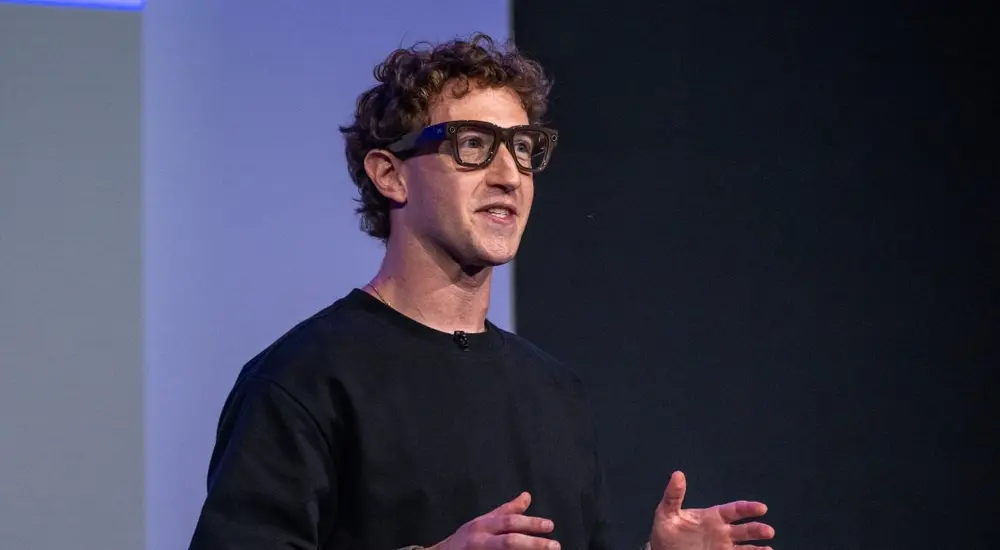
Meta held its 2026 Connect keynote today, unveiling the Ray-Ban Meta Gen 3 lineup, headlined by an unexpected camera-free model aimed squarely at privacy concerns.
Meta Connect has become one of the more predictable fixtures on the tech calendar over the past few years, the one annual event where Mark Zuckerberg reliably steps up to reveal whatever the company's smart glasses division has been building since the last keynote. Today's edition followed that pattern in one sense, more smart glasses, another year of iteration on the Ray-Ban Meta line, but the actual headline announcement took a direction almost nobody was expecting going in.
The camera-free model is the real story
Rather than simply pushing more cameras, more sensors, and more always-on recording capability into the next generation of smart glasses, Meta used part of today's keynote to unveil a version of the Ray-Ban Meta Gen 3 lineup that strips the camera out entirely. It's a genuinely unusual move for a company that's spent years positioning cameras as the core selling point of this entire product category, and it says something specific about how seriously Meta is treating the criticism that's followed the smart glasses category since its earliest releases.
Why this move makes sense given the backlash Meta has faced
Meta has taken real, sustained criticism over its smart glasses line for not doing enough to prevent people from being recorded without their knowledge or consent, a problem baked directly into a product that looks like ordinary eyewear while quietly capturing photo and video. That criticism hasn't just come from privacy advocates either, it's shown up repeatedly in mainstream coverage every time a viral clip surfaces of someone using the glasses in a way that makes bystanders uncomfortable. A camera-free model doesn't solve that broader industry problem on its own, since the camera-equipped versions remain on sale alongside it, but it does give Meta a genuine answer for customers who want the smart glasses experience, on-device audio, assistant features, and the design itself, without personally being part of the privacy controversy.
What else came out of the keynote
Beyond the camera-free model, today's event also touched on the possibility of new mixed-reality glasses, continuing Meta's steady push toward blending its smart glasses line with more immersive AR capability rather than treating the two product categories as separate. There was reportedly no major update on a new standalone VR headset, despite it having been a considerable stretch of time since the company's last major release in that category, suggesting Meta's hardware attention this cycle is concentrated almost entirely on the glasses form factor rather than spreading across its full hardware lineup.
Why smart glasses keep getting this much attention every year
Smart glasses have become one of the more closely watched hardware categories in consumer tech precisely because the form factor solves a problem previous wearables never fully cracked, getting useful technology onto someone's body in a way that doesn't look or feel like wearing technology at all. That's exactly why the privacy concerns matter so much here. A watch or a pair of earbuds recording someone without consent is a genuinely different, and generally less alarming, proposition than a pair of glasses doing the same thing while looking completely ordinary to everyone around the wearer.
What this means for the smart glasses category going forward
A major player like Meta building a camera-free option directly into its flagship glasses lineup, rather than treating the criticism as a public relations problem to manage through messaging alone, is a meaningful signal for where this entire product category might be heading. If the camera-free model sells well, it could become a genuine template other smart glasses manufacturers look at seriously, treating privacy-conscious hardware variants as a real product segment worth building for rather than a niche afterthought. If it doesn't sell, it's likely to be remembered as a well-intentioned gesture that didn't move the needle on an industry-wide trust problem that's going to need more than one hardware SKU to actually resolve.