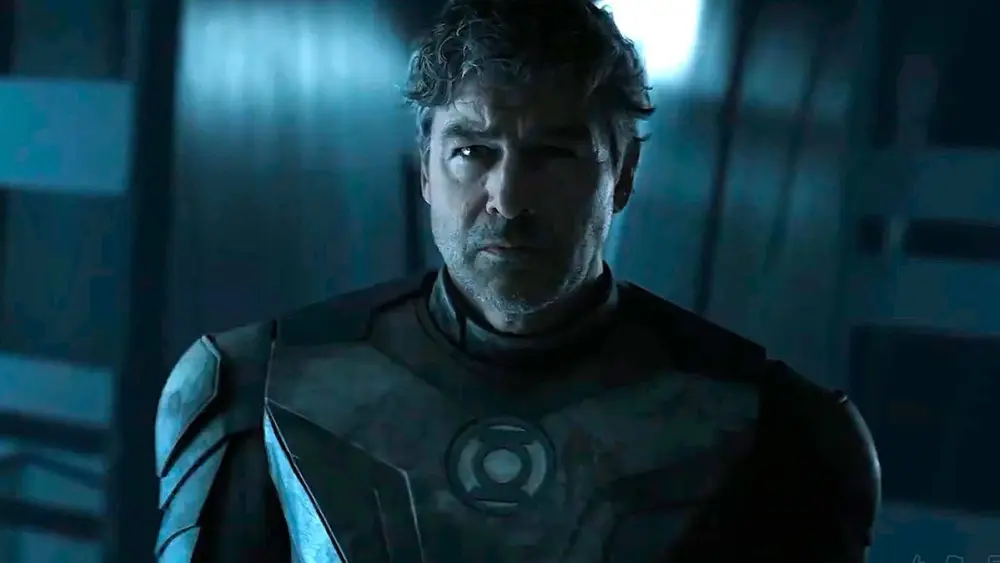
Lanterns has a mystery it planted in episode one that it's spent its entire first season circling around, and while most viewers have accepted the twist on face value, dialogue in the show's own midseason trailer suggests there is a second explanation.
Warning: spoilers ahead of episode 1 finale
There's a specific kind of TV twist that only works if half the audience doesn't buy it. HBO's Lanterns pulled one of these in its premiere, closing the episode on an image that has split fans into two very different camps, and the show has spent the following weeks quietly feeding the camp that thinks the twist isn't what it looks like.
What the premiere actually did
The season is split across two timelines, and the 2026 thread ends with a groundskeeper finding Hal Jordan's body, frozen in the bleachers of a football stadium in Rushville, Nebraska, a decade after the investigation the rest of the season is built around. There's a bullet wound and no ring on his finger, and John Stewart, who hadn't spoken to Hal in ten years, is the one who finds him. Kyle Chandler told Deadline he "cheered" reading the scene for the first time, less because his character was written out and more, in his words, because of how it set up everything that follows.
That's an odd thing to say about a death scene, and it's the first hint that Lanterns doesn't want you treating this ending like you'd treat a normal one.
A line in the trailer that's doing more than it should.
The midseason trailer, dropped September 17 ahead of the final three episodes, gives Sinestro a line that's since been picked apart across fan forums. He tells John that Hal didn't have to die for nothing, and that he knows a way. Not "I'm sorry for your loss" or anything resembling grief, but a plan.
Sinestro isn't a character this show has bothered making sentimental, which makes that word choice stand out even more. People don't usually announce a way forward with regard to a death they consider closed. They announce one when there's still something to fix.
Why the comics give this theory real footing
Hal Jordan has "died" in DC's source material before, most recently in Joshua Williamson's Dark Crisis run, and that death turned out to be staged, orchestrated by none other than John Stewart himself. Lanterns is co-created by Damon Lindelof, a writer whose entire résumé, Lost, The Leftovers, runs on training audiences to distrust the first explanation they're handed. Building a season around a Hal Jordan death right after the comics already used that same fake-out isn't the kind of overlap a show like this would leave in by accident.
Lindelof has also talked openly about why the death happens in episode one, saying it was in part so that this season wouldn't feel like the regular kind where a season is just one adventure that wraps up nicely. It's also not how someone frames a permanent, emotionally final beat. It's how someone frames a rug pull.
The detail everyone keeps skipping past
Hal's ring disappears at the exact moment his body turns up, and in this mythology, the ring isn't a prop but is tied to its wearer's life force and is capable of carrying a digital imprint of their consciousness (the show has already teased through what fans have started calling the Hal-O-Gram). A missing ring in a story this carefully laid out isn't a loose end. It's either the tool for bringing Hal back or the exact technique someone used to fake his death in the first place, and the season's remaining episodes have already promised John traveling off-world with that same ring in hand.
Where this theory has to be careful
None of this means for certain a comeback, Lindelof has let deaths stay dead before, The Leftovers spent its entire run refusing to soften loss for the audience's comfort, and there's a real version of this story where Hal stays dead, where John Stewart has to build the rest of the season and the DCU's future around a version of Green Lantern mythology that doesn't have Hal Jordan in it anymore. The season finale lands October 4. That's the episode that actually settles which read was right and not the trailer or this theory.